XIII Sunday after Pentecost: The Lord’s Vineyard and the Light That Never Fades.
- Father Michele Alberto

- 2 days ago
- 16 min read
A reading from the Holy Gospel according to the Apostle and Evangelist Saint Matthew (Matthew 21:33–42).
“In that time, Jesus said to the chief priests and elders of the people:
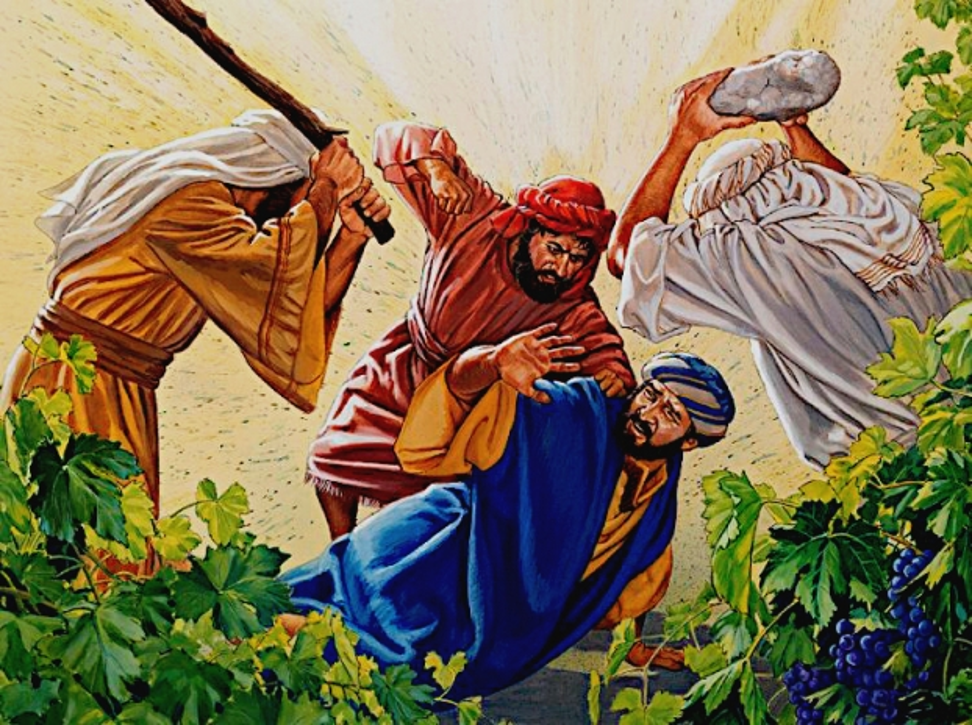
‘Listen to another parable: There was a landowner who planted a vineyard. He put a fence around it, dug a winepress in it, and built a watchtower. Then he leased it to tenants and went away. When the harvest time approached, he sent his servants to the tenants to collect his fruit. But the tenants took his servants; they beat one, killed another, and stoned another. Then he sent other servants, more than the first time, but the tenants treated them in the same way.
Finally, he sent his son to them, saying, “They will respect my son.” But when the tenants saw the son, they said to one another, “This is the heir. Come, let us kill him and take his inheritance.” So they took him, threw him out of the vineyard, and killed him.
Therefore, when the owner of the vineyard comes, what will he do to those tenants?’
They answered him, ‘He will bring those wretches to a wretched end and lease the vineyard to other tenants who will give him the fruits at the proper time.’
Jesus said to them, ‘Have you never read in the Scriptures:
“The stone the builders rejected has become the cornerstone; this was the Lord’s doing, and it is marvelous in our eyes”?’”.
Homily.
Beloved brothers and sisters in the Lord,
the Holy Gospel we have heard today leads us into a vineyard. At first glance, it might seem to be nothing more than a story told by Jesus about a group of unfaithful tenants. Yet, as always happens with the words of our Savior, what appears to be a simple image drawn from everyday life actually contains within it the very mystery of our salvation.
The vineyard of which Christ speaks is the vineyard of God; it is the people whom He has chosen, it is the history of the covenant, but it is also, in a profoundly personal and even terrifying way, our own life. For each one of us is also a vineyard that God has planted, tended, and entrusted to our care, expecting from us not simply leaves, nor merely an outward appearance of religious devotion, but fruit capable of bearing witness that His grace has not passed through our hearts in vain.
Jesus says: “There was a landowner who planted a vineyard, put a fence around it, dug a winepress in it, built a tower, and leased it to tenants” (Matthew 21:33). Before man does anything, God has already done everything. Before the fruit is requested, the vineyard has already been prepared. Before our response comes the gift. Before our faithfulness comes grace. Before we had even learned to seek God, God had already begun to seek us.
This is precisely one of the most beautiful aspects of the parable, because it reminds us that our life does not begin with us. We are accustomed to speaking of “my” and “mine”: my life, my time, my abilities, my possessions, my plans. Yet the Gospel reminds us that everything we possess was first received. Life is a gift; time is a gift; the people we love are a gift; faith is a gift; even the possibility of repentance is a gift. We are not absolute owners of the vineyard; we are tenants to whom God has entrusted something that belongs to Him.
Saint John Chrysostom, commenting on this parable, emphasizes precisely the care with which the master prepares the vineyard, showing how God has provided everything necessary for it to bear fruit (Homily LXVIII on the Gospel of Matthew, PG 58, 641–644). This truth is fundamental, because it means that God does not come to ask something of us after leaving us alone. He first gives us what enables us to respond. Grace always precedes our response.
But it is precisely here that the drama begins. After receiving the vineyard, the tenants begin to behave as though the vineyard belonged to them. The gift is transformed into possession. What had been received becomes something to be held onto. And this is one of the deepest roots of human sin: forgetting that we are creatures and living as though we were the absolute masters of our own existence.
For this reason, the parable speaks not only of the tenants of that time. It also speaks of us. Whenever we say, “This life is mine, and I will do whatever I want with it,” we forget the Giver. Whenever we regard another person as our possession, we forget that this person also belongs to God. Whenever we use our time solely for ourselves, we forget that time has been entrusted to us. And even when we turn our faith into something that merely serves to confirm our own ideas, rather than allowing ourselves to be converted by the Word of God, we risk becoming tenants who have forgotten the master of the vineyard.
And yet God does not abandon His vineyard. This is perhaps one of the most moving aspects of the parable. He could have left them to their unfaithfulness, but He continues to seek them. He sends the servants; He sends the prophets; He calls His people back; He waits. Some are beaten, others insulted, others killed, but God continues to speak. The history of salvation is the history of a God who never grows weary of man.
It is precisely this great divine patience that we see continually throughout the Scriptures. Man turns away, and God calls him back. Man falls, and God raises him up. Man hides, and God searches for him. Man closes the door, and God continues to knock. And this patience does not concern humanity only in general; it concerns each one of us personally. How many times has the Lord spoken to us, and we have put off responding? How many times have we heard within ourselves a voice calling us to repentance, only to say, “I will do it later”? How many times has God given us the opportunity to begin again, and yet we have chosen to remain prisoners of our old habits?
And yet God continues to come.
Until the parable reaches its highest and most dramatic point: “Finally, he sent his son to them” (Matthew 21:37). Here we are no longer simply confronted with a moral story. We are standing before the mystery of the Incarnation. God no longer sends merely a servant. He no longer sends merely a prophet. He sends His Son, and the Son enters the vineyard.
The eternal Word of the Father enters into our history. He through whom all things were created truly assumes our human nature. He who is God by nature becomes man without ceasing to be God. The Creator enters into creation, not because He has any need of it, but because we were in need of salvation.
And it is here that we understand why Isaiah’s vineyard and the vineyard of the Gospel are so intimately connected. Centuries before Christ, the prophet sang: “Let me sing for my beloved my love song concerning his vineyard. My beloved had a vineyard on a very fertile hill. He dug it and cleared it of stones and planted it with choice vines; he built a watchtower in the midst of it and hewed out a wine vat in it” (Isaiah 5:1–2). Isaiah describes precisely the same care that we encounter in the Gospel parable. God prepares the vineyard with love, surrounds it, protects it, and makes it capable of bearing fruit.
But then the prophet asks a question that should enter deeply into the heart of each one of us today: “What more was there to do for my vineyard that I have not done?” (Isaiah 5:4).
What more could God have done?
This question runs through the whole history of salvation until it reaches the Cross. God created man. He gave him life. He spoke to him through the patriarchs and the prophets. He instructed and formed His people. He forgave. He waited. And when man continued to reject Him, God sent His Son.
What more could He do? The Cross is the answer.
The Son is rejected, led outside the city, and handed over to death. Yet the very One whom men reject becomes the One whom God has chosen as the foundation of salvation. For this reason, Jesus concludes by quoting the Psalm: “The stone that the builders rejected has become the cornerstone” (Psalm 117:22 [118:22]).
This is the paradoxical logic of the Kingdom of God: what men regard as worthless becomes the foundation; what appears to be defeat becomes victory; what appears to be death becomes Life. The Cross is not the end of Christ’s story, but the place from which the power of the Resurrection begins to be revealed.
And is this not precisely what the Psalm proclaims immediately afterward? “This is the day that the Lord has made; let us rejoice and be glad in it” (Psalm 117:24 [118:24]). The Church can proclaim these words even before the Cross because she already knows that the Cross will not have the final word. The Lord’s day is born from the night of the Passion. The light of the Resurrection shines forth precisely where men believed that every light had been extinguished.
And it is at this point that the Word of God leads us almost naturally toward the solemn feast we celebrated on Friday, the Dormition of the Most Holy Theotokos. For the Son who comes into the vineyard is none other than the Son who received flesh from the Virgin Mary. The eternal Word enters our history through her womb. He who is eternally God assumes our humanity from her. This is why Mary is truly Theotokos, the Mother of God according to the flesh: not because she gave origin to the divinity of the Son, which is eternal, but because the One who was born from her according to the flesh is truly the eternal Son of God.
And precisely for this reason, the Dormition of the Theotokos cannot be separated from the Pascha of Christ. Mary does not possess a salvation different from that of her Son. Her glory is the fruit of Christ’s grace. Her victory over death, which the Church celebrates, is inseparable from Christ’s victory over death.
Saint John of Damascus, in celebrating the mystery of the Dormition, contemplates precisely this reality: death is not denied, but passed through in the hope of the Resurrection, because the One who took flesh from the Virgin is the Lord of life (Homily I on the Dormition of the Blessed Virgin Mary, PG 96, 700–719).
And so Mary becomes for us an extraordinarily important figure also in the light of the parable. The tenants say: “This is the heir; come, let us kill him and take his inheritance” (Matthew 21:38). They want to possess. Mary, on the other hand, receives. They want to take; Mary accepts. They want to become masters; Mary responds: “Behold, I am the servant of the Lord” (Luke 1:38).
And it is precisely here that the Theotokos shows us what the response of the creature before God ought to be. We are not called to seek to possess God, but to allow ourselves to be possessed by His love. We are not called to demand control over His will, but to learn to trust Him. We are not called to ask God to conform Himself to our plans, but to allow our lives to be transformed by His will.
And this openness of the Theotokos leads us directly to the words of Saint Paul that we heard: “Be watchful, stand firm in the faith, be courageous, be strong. Let everything you do be done in love” (1 Corinthians 16:13–14).
These words are not foreign to the parable of the vineyard. On the contrary, they seem almost to indicate how we are to live while we await the return of the master. If we know that the vineyard belongs to the Lord, then we must be watchful. If we know that Christ is the cornerstone, then we must stand firm in the faith. If we know that the Son has given Himself for us, then everything we do must be done in love.
“Be watchful” does not simply mean remaining physically awake. It means guarding our hearts. It means recognizing when resentment begins to take possession of us, when pride prevents us from asking for forgiveness, when our faith becomes merely a habit, or when prayer becomes nothing more than a formula spoken with our lips.
And immediately Paul adds: “Stand firm in the faith.” He does not say that we will understand everything. He tells us to remain steadfast. For there will be moments when we do not understand. There will be sufferings that we cannot explain, prayers that may seem to receive no answer, and moments when God may appear to be silent.
But faith does not consist in understanding everything. Faith consists in knowing into whose hands we can entrust what we do not understand.
And here the Theotokos comes before us once again. Mary was not given an explanation for everything. She was given a word, and she trusted. She knew the prophecy of Simeon. She knew the flight into Egypt. She knew misunderstanding, sorrow, and finally the Cross. And yet she remained.
This is the strength of faith: to remain with Christ even when we do not understand.
And this faith, when it becomes authentic, inevitably leads to love. That is why Paul continues: “Let everything you do be done in love.” Love is the fruit that God seeks in His vineyard.
It is not enough to have leaves. We must bear fruit.
It is not enough to appear to be Christians. We must become Christians.
It is not enough to speak about Christ. We must allow Christ to transform the way we see others.
And it is precisely here that this word of the Gospel becomes a personal question: What would the Lord find today in the vineyard of my soul? What would He find? Would He find a heart capable of forgiving? Or a heart that still clings to resentment? Would He find a living faith? Or merely religious habits? Would He find love? Or judgment? Would He find humility? Or the desire always to be right?
This question may hurt us, but it is a saving question. For the Lord does not come looking for a perfect vineyard. He comes looking for a vineyard that bears fruit.
And it is precisely this that enables us to understand even more deeply a story that, in these days, has accompanied the celebration of Our Lady of the Seven Veils in Foggia, in Apulia. The people of Foggia preserve the memory of the Iconavetere, the Sacred Table, venerated as an image of the Most Holy Virgin holding the Child in her arms. According to tradition, the image came from the East and was associated by local devotion with Constantinople; it was said to have been hidden in order to protect it from the fury of the iconoclasts. Tradition recounts that the sacred icon, wrapped in veils and hidden in the mud of a marsh, was miraculously rediscovered, preceded by the mysterious appearance of three little flames. This story, deeply rooted in the religious memory of the city, has become part of Foggia’s very identity.
And perhaps this story offers us an image that connects in a remarkable way with the word of the Gospel. The icon is remembered as having been hidden beneath the mud, wrapped in its veils, in order to protect it from destruction. What, in the eyes of men, appeared hidden, lost, and forgotten was in fact being preserved.
And is this not one of the deepest experiences of faith?
We often think that God must make Himself evident. We want to see Him, understand Him, and feel His presence. We want every prayer we offer to receive an immediate answer. But God does not always reveal Himself through what is spectacular. Sometimes He remains hidden beneath the veil. Sometimes it seems as though He is not there. Sometimes it seems that our prayer has fallen into the mud of our lives. And yet God continues to be present.
For this reason, the story of Our Lady of the Seven Veils can become a parable within the parable. The Gospel speaks to us of the vineyard; Foggia speaks to us of an image hidden in the earth; Isaiah speaks to us of the vineyard loved by God; the Psalm speaks to us of the rejected stone that became the cornerstone. And everything leads us to the same truth: God knows how to preserve what men believe to be lost.
But there is something else that, this year, became a matter of discussion during the patronal feast in Foggia. On August 14, in the context of the celebrations dedicated to Our Lady of the Seven Veils, the traditional festive illuminations were not installed, following a decision by the municipal administration, a choice that sparked discussion and reactions throughout the city.
And yet, precisely in the face of this situation, the Christian can pause and ask a question that goes far deeper than the controversy: What does it truly mean to illuminate a city?
Certainly, it is beautiful to see a city illuminated during a feast. The festive lights are part of popular tradition; they create beauty and make the joy of the celebration visible. But we can also ask ourselves: is it more important to see a city filled with lights, or to see a city setting out on a journey behind the Mother of God? Is it more important for the streets to be illuminated by light bulbs, or for the hearts of men and women to be enlightened by Christ?
For we can illuminate a street and leave a heart in darkness.
We can fill a square with light and have families who no longer speak to one another.
We can make a city beautiful to the eye and still have people living in loneliness.
We can light thousands of lamps and yet fail to kindle even a single spark of love in our hearts.
And so perhaps today’s Gospel allows us to look at this situation with different eyes. Not in order to judge the mayor, nor to turn this homily into a political controversy, but to allow ourselves to be challenged by a spiritual question: What kind of light are we seeking?
Because on August 14, while the traditional festive illuminations were not lighting the streets of the city, the people could nevertheless carry their Iconavetere through the streets of Foggia: the Mother with the Son in her arms.
And here there is something profoundly beautiful.
The true image of the feast is not simply that of a city that shines, but that of a people who walk.
A people who carry the Mother.
A Mother who carries the Son.
And the Son who leads the people to the Father.
This is the true light.
Isaiah had proclaimed: “The people who walked in darkness have seen a great light” (Isaiah 9:1). And the Evangelist John reveals to us the fulfillment of this prophecy: “The light shines in the darkness, and the darkness has not overcome it” (John 1:5). That light has a name: Christ.
It is not the light that human beings switch on and off.
It is not a light that lasts for only one night.
It is not a light that depends upon human decisions.
It is the Light that entered into death and conquered it.
It is the Light that illuminated the tomb.
It is the Light that shone forth in the Resurrection.
It is the Light that the Church proclaims to the world.
And it is precisely for this reason that Our Lady of the Seven Veils, although she is an object of veneration, must never become the final destination of our gaze. She bears Christ. She points to Christ. She leads us to Christ. As at the wedding in Cana, her word continues to resound within the Church: “Do whatever He tells you” (John 2:5).
This is true devotion to the Theotokos: not to stop at her, but through her to arrive at the Son.
And so we can also understand the deeper meaning of the seven veils. There are veils in our lives. There is the veil of suffering, the veil of illness and fragility, the veil of loneliness, the veil of death, the veil of prayers that have not yet received an answer. We would like to tear away all these veils, but sometimes the Lord simply asks us to trust, because behind the veil, Christ is present.
And this brings us once again to the Dormition of the Theotokos. Even death, which for us is the greatest veil of all, could not permanently conceal Life. Christ entered into death and transformed it from within. For this reason, the Church can celebrate the Dormition with sorrow and, at the same time, with joy: with sorrow because of the reality of death, and with joy because of the hope of the life that Christ has inaugurated.
And so the question of the vineyard returns to us once again: What is lacking?
What is lacking is our response. What is lacking is for the human heart to stop saying, “It is mine,” and to learn to say, “It is Yours, O Lord.” My life is Yours. My family is Yours. My time is Yours. My abilities are Yours. My sufferings are Yours. My future is Yours.
We are called to guard what we have received until the day when the master comes. And when He comes, what will He find? What will He find in our vineyard? What will He find in our soul?
Perhaps He will not find a perfect life. This is not what is asked of us. But He will find a heart that, despite its falls, continued to return to Him. He will find a heart that, despite its wounds, sought to forgive. He will find a heart that, despite its fears, continued to believe.
And so, in the light of Pascha, we can look upon the Dormition of the Theotokos; in the light of the Dormition, we can understand more deeply the Christian hope; in the light of hope, we can return to our own lives; and returning to our lives, we can finally ask ourselves what fruit we are bearing in the Lord’s vineyard.
We do not need a perfect life. We need a life surrendered to God.
We do not need to know everything. We need to trust.
We do not need every road to be illuminated. We need Christ to illumine our hearts.
And so let us allow the Lord to continue His work in His vineyard—even when He prunes, even when He corrects, even when He allows us to pass through a difficult season. For the vinedresser knows what He is doing, even when the branch does not understand the pruning.
And when the day finally comes when all the lights of the world are extinguished and only the light of Christ remains, may the Lord find in us that fruit which He Himself has sown: a faith that has not surrendered, a hope that has not died, and a love that has not gone out.
Then we will understand that the true feast was not in the festive lights, but in the presence of Christ. We will understand that the true light was not the light that illuminated the streets, but the light that illumined the heart. We will understand that the true procession was not merely the one that passed through the city, but the one that God had accomplished within our souls. And together with the Most Holy Theotokos, we will then be able to behold the Son, no longer through the veil of faith, no longer through the dimness of our fragile understanding, but in the everlasting light of the Kingdom.
For “the stone that the builders rejected has become the cornerstone.” For “the light shines in the darkness, and the darkness has not overcome it.” For “this is the day that the Lord has made; let us rejoice and be glad in it.” And because death, for those who are in Christ, is no longer the final word.
And to Him, our Lord and Savior, together with the Father and the Most Holy Spirit, belong all glory, honor, and worship, now and ever, and unto the ages of ages.
Amen.
Archpriest Michele Alberto Del Duca.


Comments